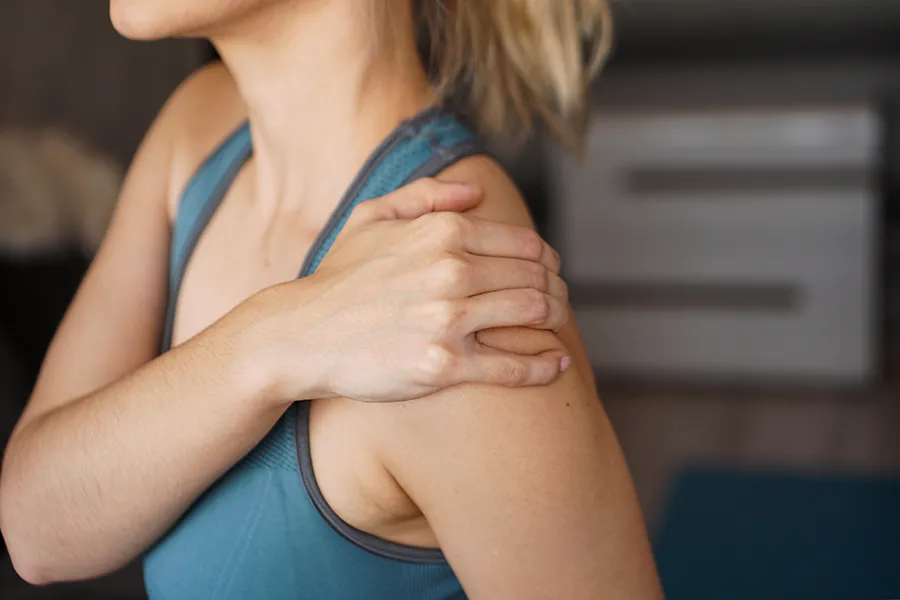
If soreness lasts longer than it should or keeps coming back in the same spots, it may be a sign that your body needs deeper support. Nonkulie Dladla, M.D. offers regenerative medicine for sore muscles to help patients in Manhattan repair, rebuild, and return stronger.
Sore muscles can be more than just a sign of effort. Sometimes they are a signal your body needs help to fully recover. Whether from workouts, strain, or everyday overuse, chronic muscle soreness can wear you down physically and mentally. Regenerative medicine targets the tissue that is not bouncing back. It supports deeper healing and helps reduce the inflammation that slows you down. PRP, PRF, and peptide-based therapies have been shown to reduce muscle inflammation, promote fiber repair, and support recovery after soft tissue strain. At Gramercy Park Longevity & Regenerative Medicine Center, we assess your movement patterns, strain history, and tissue response to design a regenerative plan that matches your activity level and goals. We help your body move past the soreness phase and into true muscle repair, so you can perform, train, and live without setbacks. If you are ready to feel stronger and recover faster, we are ready to help you get there. Serving New York, New York and surrounding New York–Newark–Bridgeport communities, Nonkulie Dladla, M.D. delivers modern regenerative care focused on strength, recovery, and resilience.
What would it feel like to move without that constant muscle tightness? Call Gramercy Park Longevity & Regenerative Medicine Center at (917) 764-3051 to ask about regenerative support for sore muscles.
Soreness That Stays Is a Sign Your Muscles Are Not Fully Recovering
Muscle soreness should fade with rest and movement. If it lingers, worsens, or keeps returning, deeper healing support may be needed. Regenerative care looks beyond fatigue. It helps restore the muscle fibers, reduce inflammation, and stop soreness from turning into chronic strain.
Healing that supports deeper muscle recovery
Muscle soreness is part of life — until it starts to limit it. Persistent soreness may reflect underlying fiber damage, poor recovery, or low-grade inflammation. If it keeps coming back or never fully resolves, the muscle may be stuck in a loop of strain and partial repair.
Regenerative medicine supports healing at the tissue level. PRP, PRF, and peptide therapies help reduce inflammation, improve blood flow, and signal muscle fibers to rebuild. These treatments are designed to help your muscles recover faster, function better, and handle more stress without flaring.
At Gramercy Park Longevity & Regenerative Medicine Center, we evaluate the patterns, mechanics, and underlying tissue factors behind your muscle pain. Then we create a plan to support complete healing so you can move, train, and live without setbacks.
Nonkulie Dladla, M.D. helps patients in New York County restore strength and reduce chronic soreness with personalized regenerative medicine.Why Some Muscle Soreness Does Not Go Away
Micro-Tears That Never Fully Repair
Muscle fibers can become damaged from overuse or sudden strain. Without full recovery, the tissue stays weak and vulnerable to reinjury.
Chronic Inflammation in the Muscle
Low-level inflammation can linger long after a workout or injury. It keeps the area sensitive, slow to respond, and prone to soreness.
Reduced Blood Flow to Healing Tissues
Some muscles have limited circulation, especially after injury. Without nutrients and oxygen, healing slows and soreness lingers.
Tension in Fascia and Surrounding Tissue
Muscles work within a network of connective tissue. If the fascia is tight, irritated, or inflamed, it can restrict movement and increase soreness.
Frequently Asked Questions
When should I be concerned about sore muscles?
If muscle soreness lasts more than a few days, returns in the same spot, or limits your activity, it may be a sign of incomplete recovery or deeper tissue damage.
How does regenerative medicine help muscle recovery?
Treatments like PRP, PRF, and peptides deliver growth factors and anti-inflammatory support to the injured muscle. This encourages repair and reduces downtime.
Is this only for athletes or intense workouts?
No. Sore muscles can affect anyone — from daily work strain to moderate exercise. Regenerative therapy helps with both acute and chronic muscle issues.
How soon can I get back to activity after treatment?
Most patients resume normal activity within a few days. Full results build over a few weeks as inflammation calms and tissue heals.
What makes this different from massage or stretching?
Massage and movement help symptoms. Regenerative therapy works at the cellular level to repair tissue and reduce inflammation for longer-term relief.
Is regenerative care safe for older adults or beginners?
Yes. These treatments are tailored to your biology and goals. They are non-surgical, drug-free, and well tolerated by a wide range of patients.
If you still have questions, Nonkulie Dladla, M.D. is here to support, guide, and help you explore the right longevity plan for your goals.
You deserve to move without soreness holding you back.
Call Nonkulie Dladla, M.D. at (917) 764-3051 to schedule your personalized muscle recovery consultation and explore regenerative support for lasting relief.

Helping Your Body Do What It Was Built to Do
Regenerative medicine at Gramercy Park Longevity & Regenerative Medicine Center isn’t experimental; it’s strategic, data-driven, and deeply restorative. Nonkulie Dladla, M.D. uses therapies like peptides, exosomes, NAD+, and stem-cell–inspired protocols to activate your body’s innate repair mechanisms. Whether you’re healing from injury, managing chronic inflammation, or optimizing longevity, Nonkulie Dladla, M.D. designs personalized programs that go far beyond short-term relief.
At Gramercy Park Longevity & Regenerative Medicine Center, our regenerative therapies are not about masking problems, they’re about restoring function, rebuilding systems, and helping your body do what it was designed to do: heal.
We take a personalized, precision-based approach using integrative therapies that include:
What Gramercy Park Longevity & Regenerative Medicine Center‘s Patients Say
“I love Dr. Dladla!! It is hard to find good doctors, but she is the best — incredibly thoughtful and caring. You feel seen and heard, as well as taken care of. She has superb beside manners!”
— Sheryl O.